The Hidden Value of Copper Bars You Need to Know
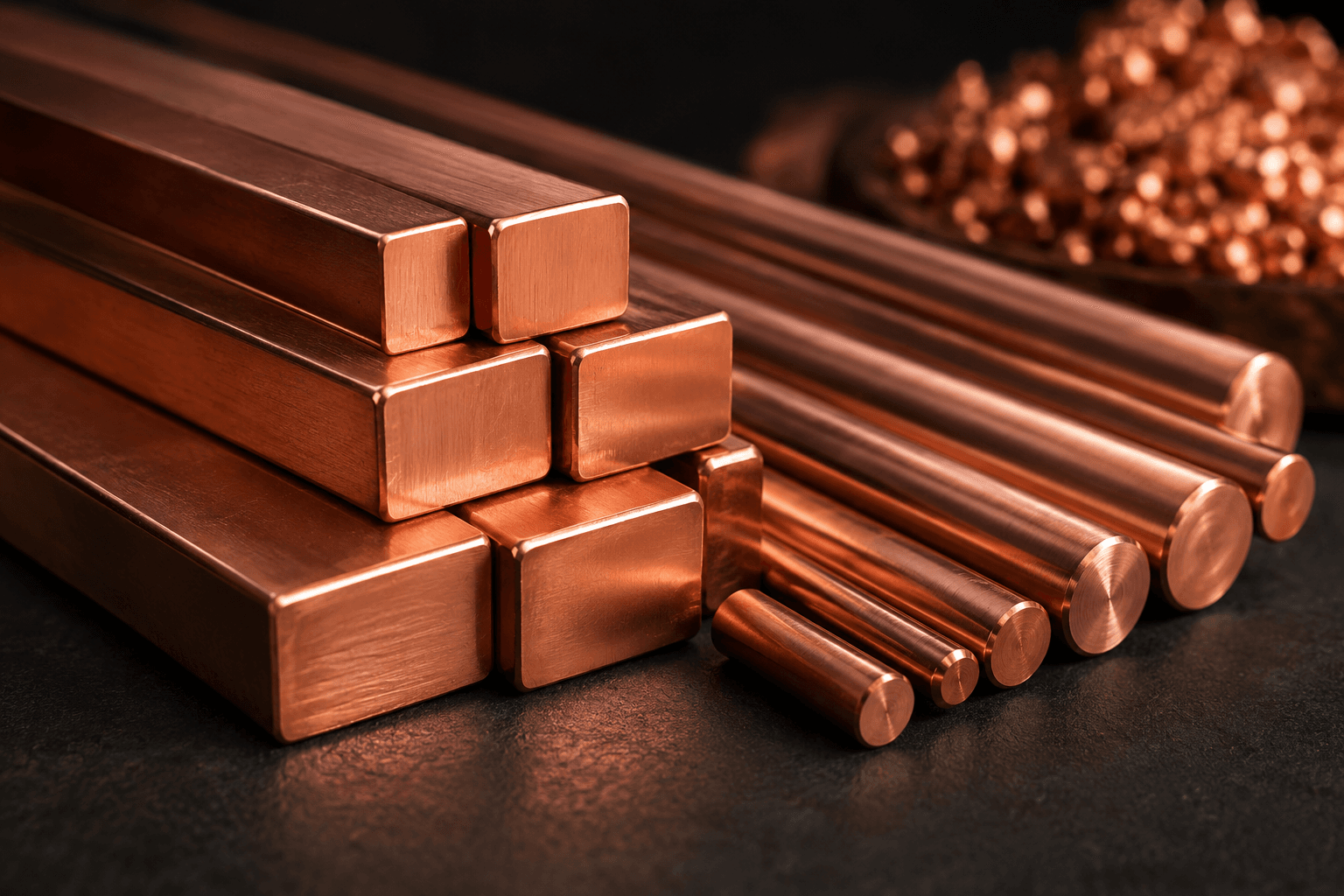
When buyers evaluate copper bars, the conversation often begins with price. While cost is certainly important, it only tells part of the story. The real value of copper bars is often found in what happens after the purchase through reliable conductivity, efficient performance, fabrication flexibility, and long-term material value.
For industries where performance and consistency matter, these advantages can have a greater impact than the initial purchase price itself.
More Than Just a Conductive Metal
Copper has remained one of the most trusted industrial materials because of its exceptional electrical and thermal conductivity. High-conductivity copper bars are widely used in applications where efficient current flow and dependable performance are essential.
Common applications include:
- Busbar systems
- Electrical panels
- Grounding systems
- Power-distribution equipment
- Current-carrying connectors
Beyond conductivity, copper also offers good corrosion resistance, durability, and ease of fabrication. These characteristics allow it to perform reliably across a wide range of industrial environments.
Where the Hidden Value Shows Up
The benefits of copper bars can be seen across multiple sectors.
In the electrical industry, they are central to busbar systems and power-distribution components. In construction and building services, copper remains important for safe electrical systems and for fabricated components tied to plumbing and HVAC performance. In manufacturing, copper bars are valued as raw stock for custom machined parts, connectors, and shaped components.
This versatility is one of the reasons copper remains a preferred non-ferrous material across modern industry.
The Hidden Advantage of Customisation
Another hidden value lies in customisation. Not every buyer requires the same bar format, dimensions, cross-section, or end-use specification. Yet market prices often treat copper bars as a standard commodity, overlooking the operational value that comes from a product designed for a specific application.
A copper bar that closely matches its intended use can help reduce material waste, minimise rework, simplify fabrication, and improve production efficiency. Over time, those benefits can translate into meaningful savings across manufacturing and procurement processes.
This is where supplier capability becomes important. Sneh Metals follows a made-to-order approach for non-ferrous profiles, supported by infrastructure such as induction furnaces, spectro testing, extrusion facilities, and mechanical testing capabilities. For industrial customers, that means greater consistency in material properties and dimensions, helping ensure that the product performs as expected from the start.
Recyclability Adds Long-Term Value
Copper is one of the few materials that can be recycled repeatedly without losing performance, and recycled copper is considered interchangeable with primary copper in many applications. Around one-third of global copper consumption already comes from recycled copper, and Indian scrap markets continue to assign meaningful value to cleaner copper grades. For fabricators, OEMs, and recyclers, that means copper bars often carry a useful residual value instead of becoming low-value waste.
Why Copper Continues to Matter
As industries become increasingly dependent on electrification, infrastructure development, and efficient energy systems, copper continues to play a vital role.
Its combination of conductivity, durability, versatility, and recyclability makes it far more than a commodity material. It remains a practical solution for applications where performance, reliability, and long-term value are essential.
The Bottom Line
The hidden value of copper bars is not hidden once you know where to look. It exists in their ability to deliver efficient performance, dependable reliability, fabrication flexibility, and lasting material value.
For businesses seeking high-quality copper and non-ferrous solutions, choosing the right specification is only part of the equation. Working with a manufacturer that understands application requirements can help unlock even greater value from the material itself.
Need Copper Solutions Tailored to Your Application?
Sneh Metals manufactures copper and non-ferrous metal products designed to meet diverse industrial requirements. Contact our team to discuss your specifications, application needs, and custom manufacturing requirements.
