
The Benefits of Using Brass Bars in Construction and Fabrication
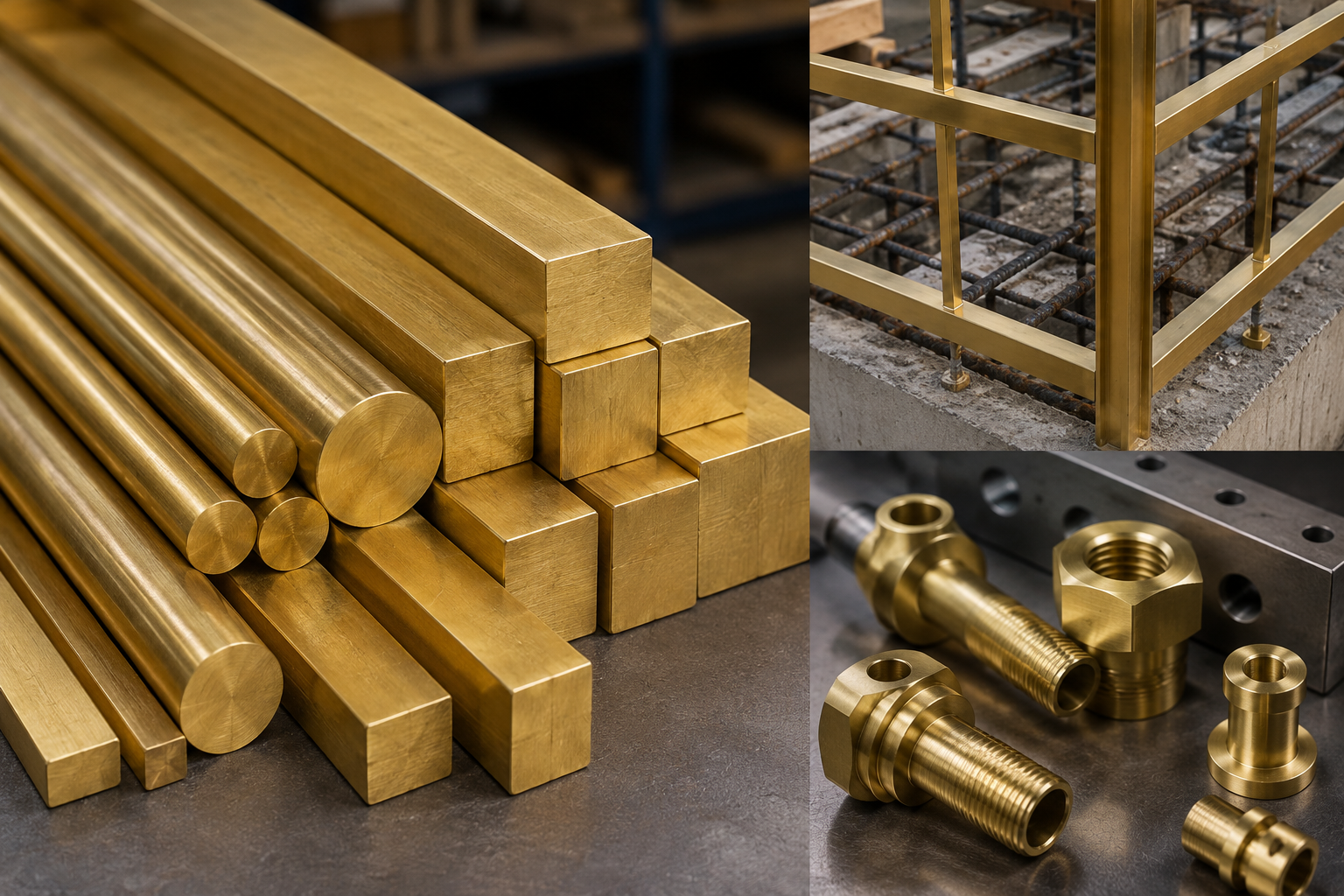
Construction or manufacturing projects use materials that can endure harsh conditions yet remain practical to fabricate. Whether it’s structural hardware, plumbing components, electrical fittings, or precision-machined parts, the material chosen has a direct impact on durability, efficiency, and long-term performance.
Among the many engineering metals available today, brass bars continue to be a preferred choice across industries. Their combination of strength, corrosion resistance, excellent machinability, and clean finish makes them suitable for applications where both performance and precision matter.
Here’s why brass bars remain a trusted material for construction and fabrication projects.
Benefits of Using Brass Bars
Reliable Strength for Long-Term Performance
Heavy structural steel is not always necessary on all projects. There are other parts that require another kind of metal – one that will be strong enough, easy to work with, and retain its properties for many years.
Brass bars and rods fit into this category perfectly. Brass bars and rods are often used to produce brackets, couplings, fasteners, braces, machinery components, and building hardware when accuracy and dependability are critical requirements. For those working with metal, this means having to work with a material that is both strong and practical.
Natural Corrosion Resistance in Demanding Environments
One of the biggest advantages of brass is its natural corrosion resistance. As a non-ferrous metal made primarily from copper and zinc, brass does not rust in the same way as iron or carbon steel.
Thus, the use of brass bars for construction becomes especially beneficial for applications where there is a risk of being in contact with moisture, varying weather conditions or high humidity. Plumbing fixtures, valves, outdoor hardware, and connectors can be protected with the help of brass’s high corrosion resistance.
By preventing any corrosion, brass elements may become less vulnerable to any breakdowns and last longer.
Easier Machining for Precise Fabrication
Brass is one of the most renowned alloys due to its superior machinability, allowing it to be used efficiently for precision fabrication.
Brass can be easily cut, drilled, tapped, turned, milled, polished, and shaped while maintaining accuracy. Thus, it is possible to create high-accuracy parts that have excellent surface finishes without extending the machining time and damaging the tools used.
The mentioned properties allow brass to be used effectively in CNC machining and precision fittings, valves, connectors, inserts, and custom-made parts. Companies engaged in the production of precision brass parts usually use brass because of its effective manufacturing process.
A Finish That Works Beyond Functionality
Performance is not the sole reason for the popularity of brass. The natural golden color of brass makes it equally desirable for uses where visual appeal plays an important part.
Brass can be polished to a high shine, given a brushed finish, electroplated, or allowed to develop a natural patina over time. This versatility makes it suitable for architectural brass applications such as door handles, railings, trims, decorative fixtures, nameplates, and interior design elements.
For projects that combine functionality with appearance, the wide range of brass bar applications continues to make brass a preferred material among architects, designers, and fabricators alike.
Cost-Effectiveness Beyond the Initial Price
Initially, brass might look to be more costly than some other materials. However, just considering the initial cost is not enough to understand whether it is really so.
Since brass works effectively, is resistant to corrosion, needs less maintenance, and has a good lifespan, it can be a more cost-effective material for your business in the long run. This is especially true because of the possibility to recycle good-quality brass billets and ingots.
Common Applications of Brass Bars
Brass bars are used across a broad range of industries because they combine durability and ease of fabrication in a single material.
Common applications include:
- Plumbing fittings and valves
- Electrical connectors and terminals
- Fasteners and threaded inserts
- Architectural hardware
- Decorative fixtures and trims
- CNC machined components
- Fabricated industrial parts
Many of these applications also make use of specialised profiles such as brass hollow rods, which allows manufacturers to meet specific engineering and fabrication requirements.
Also Read: Applications For Round Brass Bars
The Bottom Line
The popularity of brass bars is the result of several properties working together. Reliable strength, natural corrosion resistance, excellent machinability, and an attractive finish make brass a dependable choice for construction and fabrication.
At Sneh Metals, we manufacture high-quality brass bars and rods in a variety of sizes and specifications to support industrial, construction, and fabrication requirements with consistent quality and dependable performance.
