
Brass vs Bronze: What’s the Difference and Which One Should You Choose?
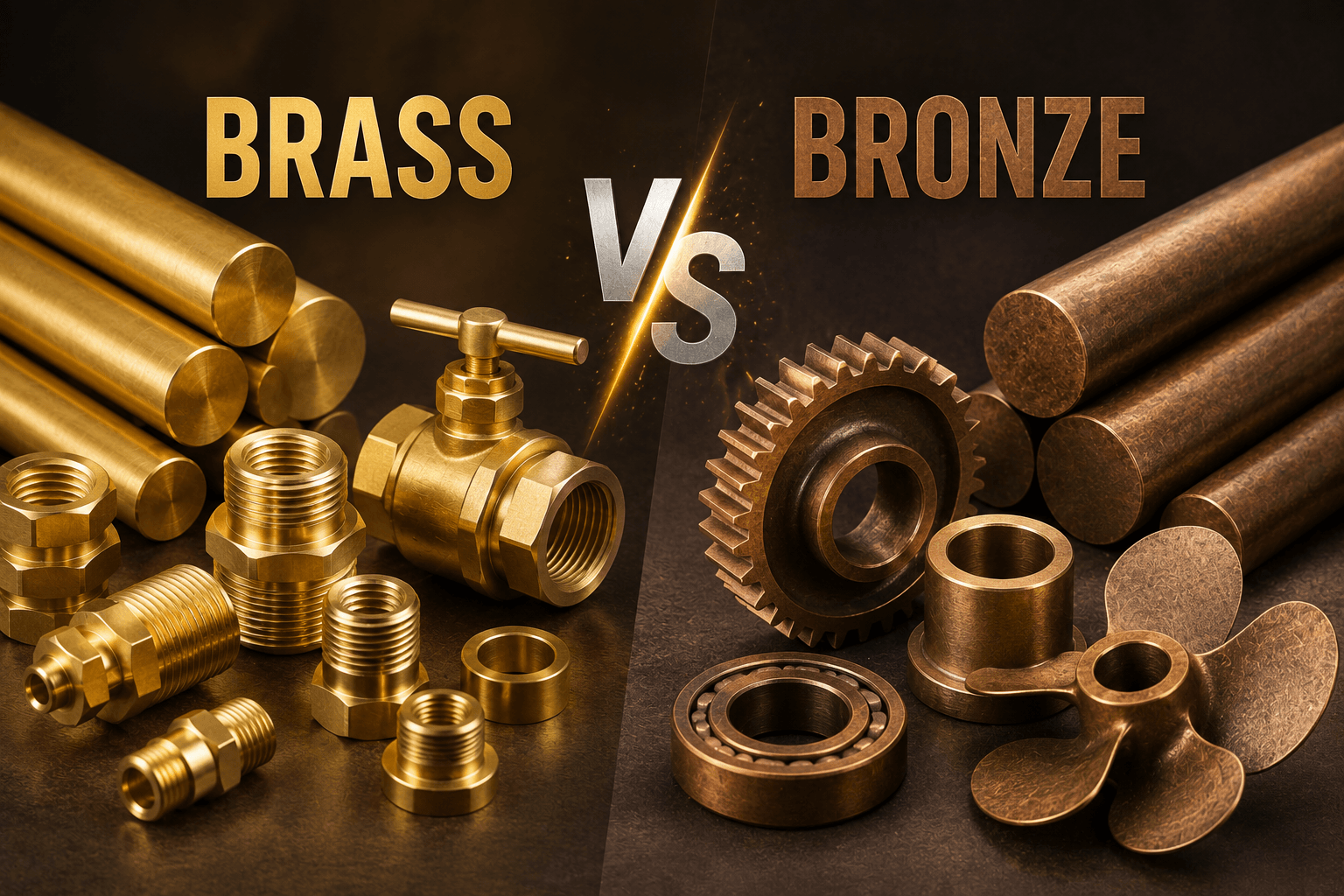
At first glance, brass and bronze don’t seem all that different. Both have a warm metallic appearance, both are copper-based alloys, and both are used to manufacture everything from industrial components to decorative hardware.
So, if they look so similar, does choosing one over the other really matter?
Absolutely.
Whether you’re sourcing raw materials, designing an engineering component, or comparing copper alloys for a manufacturing project, understanding the difference between brass and bronze can help you make a more informed decision. Let’s start by understanding the difference between brass and bronze and why it matters for your application.
Why Do Brass and Bronze Often Get Confused?
The confusion usually begins with their appearance. Since both alloys are made primarily from copper, they often share a similar golden-brown finish. But that’s where the similarity starts to fade. Before comparing them side by side, let’s quickly understand what each alloy is.
What is Brass?
Brass is a copper alloy primarily made from copper and zinc. It is known for its excellent machinability, corrosion resistance, and versatility, making it a preferred material for plumbing fittings, electrical components, and precision-engineered parts.
What is Bronze?
Bronze is a copper alloy traditionally made from copper and tin, although some modern bronze alloys contain additional elements to enhance specific properties. It is valued for its hardness, wear resistance, and durability in demanding industrial applications.
In other words, two metals may look alike, but they can behave very differently once they’re put to work.
Now that we’ve covered the basics, let’s compare brass and bronze side by side to see how they differ in real-world applications.
Brass vs Bronze at a Glance
| Property | Brass | Bronze |
| Composition | Copper + Zinc | Copper + Tin |
| Colour | Bright yellow-gold | Reddish-brown |
| Strength | Good | Higher hardness |
| Machinability | Excellent | Moderate |
| Corrosion Resistance | Very Good | Excellent in marine environments |
| Conductivity | Better electrical conductivity | Lower than brass |
| Cost | More economical | Generally more expensive |
| Common Applications | Fittings, valves, fasteners, electrical parts | Bearings, bushings, marine hardware |
The Brass vs Bronze comparison table gives you the quick answer. But if you’re deciding which alloy is right for your project, there’s a little more to the story.
What Makes Brass Different from Bronze?
Composition
Everything starts with the alloying element. Zinc makes brass easier to shape, machine, and fabricate, while tin gives bronze greater hardness and wear resistance. It’s a simple difference on paper, but one that significantly changes how each metal performs.
Strength & Durability
Bronze is generally harder and better suited for components exposed to constant friction or heavy mechanical loads. However, for many industrial applications, brass offers more than enough strength while being easier to manufacture into precise, complex shapes.
Corrosion Resistance
Both metals resist corrosion remarkably well, but they excel in different environments. Bronze is often chosen for prolonged exposure to seawater because of its excellent resistance to saltwater corrosion. Brass, meanwhile, performs exceptionally well in plumbing systems, industrial equipment, and general manufacturing applications where moisture resistance is important without the extreme demands of marine environments.
Machinability
Brass is significantly easier to machine, thanks to its zinc content. It cuts cleanly, produces smoother finishes, and causes less tool wear, allowing manufacturers to produce intricate components faster and more efficiently. Bronze, being harder, requires more machining effort but offers greater wear resistance in demanding applications.
Conductivity, Appearance & Cost Differences
Brass generally offers better electrical conductivity than bronze, which is one of the reasons brass products are widely used for electrical connectors, terminals, and other components where reliable current flow matters. Its brighter golden appearance also makes it a preferred choice for decorative and architectural applications. On top of that, brass is typically more economical than bronze, making it a practical option for large-scale manufacturing.
Where Is Brass Commonly Used?
Take a closer look around any manufacturing facility, and you’ll find brass in more places than you might expect.
Its unique balance of strength, corrosion resistance, and machinability makes it a preferred choice across industries that require reliable performance and precision.
Brass is widely used for:
- Plumbing fittings and valves
- Electrical connectors and terminals
- Precision turned components
- Fasteners and inserts
- Architectural hardware
- Decorative fixtures
Because brass is easier to machine than many other engineering alloys, manufacturers can produce intricate components faster, maintain tighter tolerances, and reduce tooling costs while maintaining consistent quality. This level of consistency ultimately depends on the quality standards followed during manufacturing.
When Does Bronze Become an Alternative?
There are situations where bronze becomes a practical alternative, particularly for components exposed to continuous friction or prolonged contact with seawater.
However, these are often specialised applications rather than everyday manufacturing requirements.
For a wide range of engineering, plumbing, electrical and precision-machined products, brass continues to offer a more balanced combination of durability, corrosion resistance, workability and cost-effectiveness. That’s why it’s trusted across industries where consistent performance and manufacturing efficiency matter just as much as strength.
Brass or Bronze: Which Is the Right Choice for Your Project?
At the end of the day, brass and bronze both have their strengths. The real question is which one aligns best with your project’s requirements.
If your project demands excellent machinability, reliable corrosion resistance, cost efficiency and precision, brass continues to be one of the most trusted engineering alloys across industries. Bronze certainly has its place, particularly in specialised environments, but for countless industrial and manufacturing applications, brass offers the balance of performance, versatility and value that manufacturers rely on every day.
Still unsure which material is right for your next project? That’s where expert guidance makes all the difference.
At Sneh Metals, we help businesses choose the right brass alloy for their specific application. With decades of manufacturing expertise and a commitment to quality, we’re here to make sure every project starts with the right material.
