
Why Jamnagar’s Brass Industry Dominates Global Manufacturing
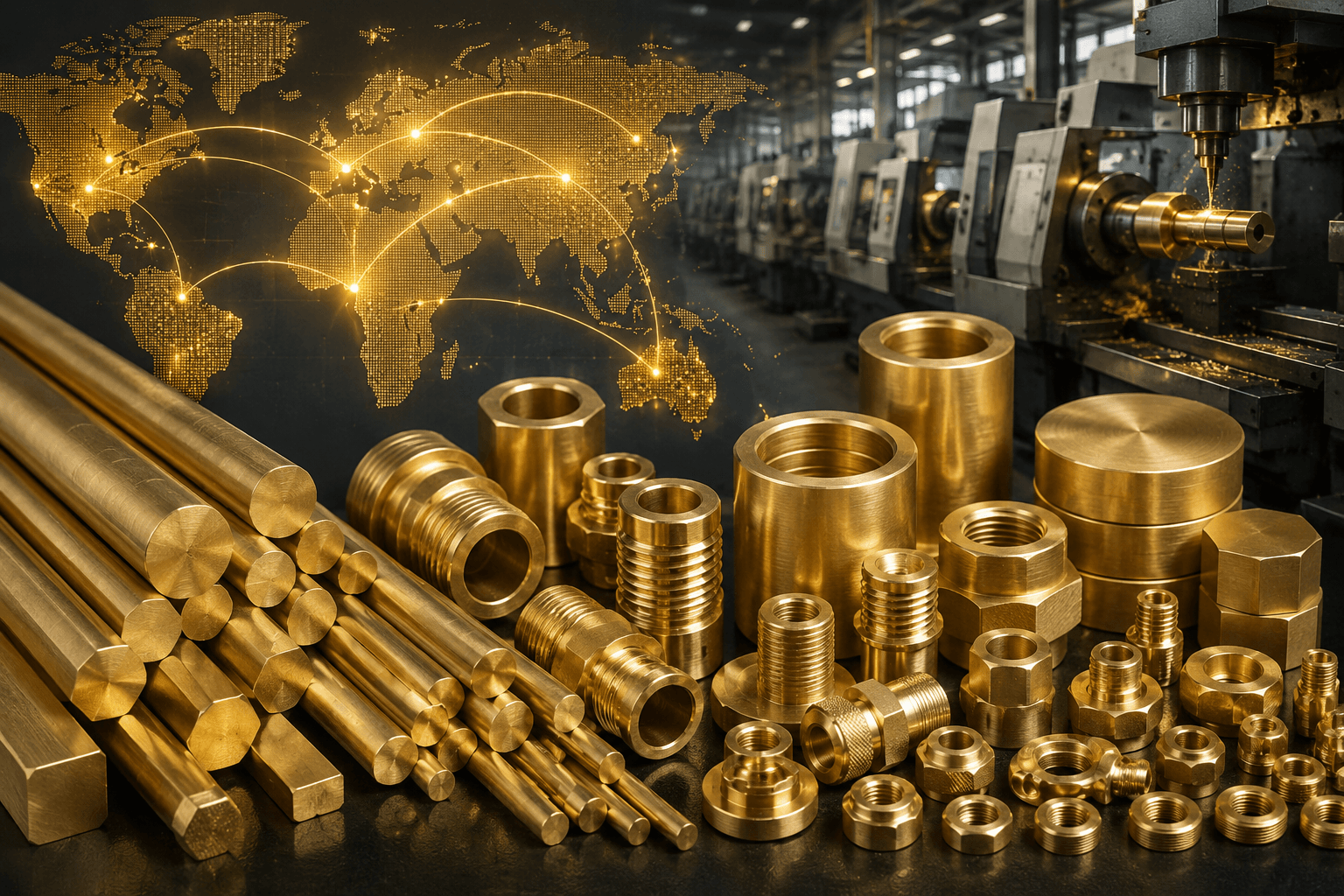
When global buyers search for reliable brass components, one name comes up again and again – Jamnagar. This city in Gujarat, India, produces an estimated 70% of India’s total brass components and supplies markets across Europe, North America, the Middle East, and Southeast Asia. For manufacturers and procurement teams worldwide, understanding why Jamnagar leads is not just interesting but actually essential.
Jamnagar by the Numbers: The Scale Is Hard to Believe
The statistics alone make the case:
- 5,000+ brass manufacturing units concentrated within GIDC industrial estates
- 60-65% of India’s total brass output produced here
- 70-80% of India’s total brass exports originate from Jamnagar
- ₹3,500 crore+ in annual exports, approximately $500 million
- 80+ countries receive Jamnagar brass, including Fortune 500 companies and global OEMs
- India contributes 98% of all global brass hardware shipments and Jamnagar is the engine behind that number
No other city on the planet comes close to this concentration of brass manufacturing capability and supply chain integration.
A Brief History: How Jamnagar Became the Brass Capital of India
Jamnagar’s relationship with metalworking stretches back centuries, rooted in the Saurashtra region’s artisan traditions. After India’s independence, the establishment of GIDC (Gujarat Industrial Development Corporation) industrial estates around the city created the infrastructure for organised, large-scale manufacturing. Over the following decades, thousands of small and medium enterprises set up operations in areas like Phase 3 Dared, forming one of the densest brass manufacturing clusters in the world. Today, the city is home to over 5,000 brass component units. Its a number that no single competing region comes close to matching.
5 Reasons Jamnagar Leads Global Brass Manufacturing
When buyers compare sourcing options for brass components globally, three regions come up: India (Jamnagar), China, and Turkey. Here is why Jamnagar consistently wins:
- Dominance: India accounts for 98% of global brass hardware exports. Jamnagar is the primary reason for that number.
- Price: Cluster-based manufacturing and a 70% recycled material usage rate keep production costs highly competitive without sacrificing quality.
- Quality: Most established Jamnagar manufacturers hold ISO 9001 certification, maintain RoHS compliance, and operate CNC machining with tight tolerance delivery.
- Speed: The ports of Kandla and Mundra, two of India’s largest cargo ports are within easy reach of Jamnagar. This gives manufacturers direct and cost-efficient access to global shipping lanes.
- Sustainability: With approximately 70% of the industry using recycled brass, Jamnagar is ahead of most global peers on eco-conscious manufacturing.
What Jamnagar Brass Industries Actually Produce
The product range coming out of Jamnagar covers the complete brass value chain:
- Brass extrusion rods in round, hexagonal, square, and flat profiles
- Brass hollow rods and knurling rods for precision applications
- Brass billets and virgin metal ingots
- Copper alloy ingots and gunmetal ingots
- Finished components: cable glands, fasteners, electrical fittings, inserts, and anchors
- Custom made-to-order profiles for OEM and industry-specific applications
This breadth means a global buyer can consolidate multiple sourcing requirements under a single Jamnagar supplier.
Sneh Metal Alloys, operating from GIDC Phase 3 Dared, Jamnagar, is a direct part of this ecosystem. It manufactures brass extrusion rods, hollow rods, billets, flats, and a full range of copper and gunmetal alloy ingots to IS, BS, and EN standards in sizes from 4mm to 90mm cross-section.
The 10% Annual Growth Story: Where Jamnagar Is Headed
The global brass market is projected to reach $15.61 billion by 2030 at a CAGR of 10.22%. Jamnagar is positioned to capture a disproportionate share of that growth. The demand drivers are structural: electric vehicles require brass battery terminals and connectors; renewable energy installations use brass fittings throughout; data centres depend on brass precision components for thermal and electrical management; and global plumbing and construction standards increasingly mandate lead-free brass fittings.
Jamnagar manufacturers are actively investing in CNC automation and AI-assisted quality control to meet rising global standards. Combined with India’s PLI scheme and active export promotion initiatives, the city’s competitive position is plateauing. The infrastructure being built today is for the next decade of demand.
The Bottom Line
Jamnagar’s global reputation was earned through thousands of manufacturers consistently delivering to international standards, decade after decade. Sneh Metal Alloys is part of that legacy and brings together all three: a Jamnagar address, IS/BS/EN-compliant production, and a product range built for international specifications. Get in touch to discuss your requirements.
